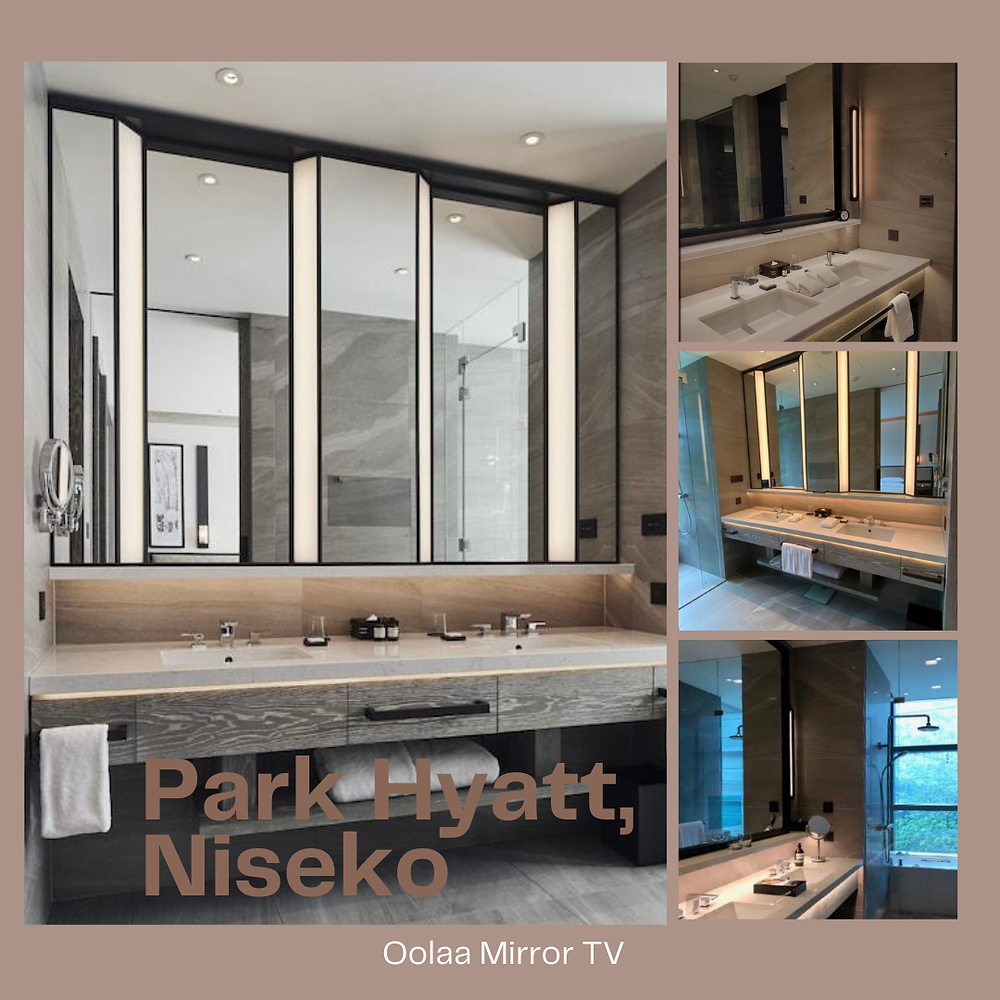
Even while enjoying the skiing in Niseko, Japan, guests can indulge in the luxury of an Oolaa Mirror TV — a screen designed to deliver exceptional entertainment without disturbing the calm of a mountain hotel bathroom. The prestigious Park Hyatt Niseko features an Oolaa Mirror TV in every bathroom, so guests enjoy smart entertainment and innovative technology throughout their stay.
Niseko is a particular kind of destination. Guests spend their days on some of the most celebrated powder snow on earth and their evenings recovering from it. The bathroom of a ski hotel is not a transit space; it is part of the ritual — the long soak, the slow thaw. A television that belongs there has to respect the room: present when wanted, invisible when not. The Mirror TV's display area is finished as a mirror, so the glass reads as a mirror first and a screen second.
A Mirror TV in every bathroom
Consistency is the Park Hyatt standard, and it is harder than it sounds. One beautiful bathroom is a photograph; a television in every bathroom is an operation — the same experience, room after room, floor after floor, for every guest who checks in. Specifying the same Oolaa Mirror TV across the property gives the hotel exactly that: entertainment in the bathroom that works the same way everywhere, backed by a single manufacturer rather than a patchwork of local purchases.
For the guest, the appeal is immediate. Watch the news with the morning routine. Keep a film running through the evening soak. The bathroom stops being the one room in the suite where the experience pauses.
The B-CAS detail most visitors never hear about
Here is the part of the project that separates a manufacturer from a reseller. To access digital TV in Japan, a B-CAS card is required — something even some locals may not know. A television shipped to Japan without one is, for broadcast purposes, furniture. Any supplier can sell a hotel a screen; making that screen actually receive Japanese digital television, in every room, is a different order of work.
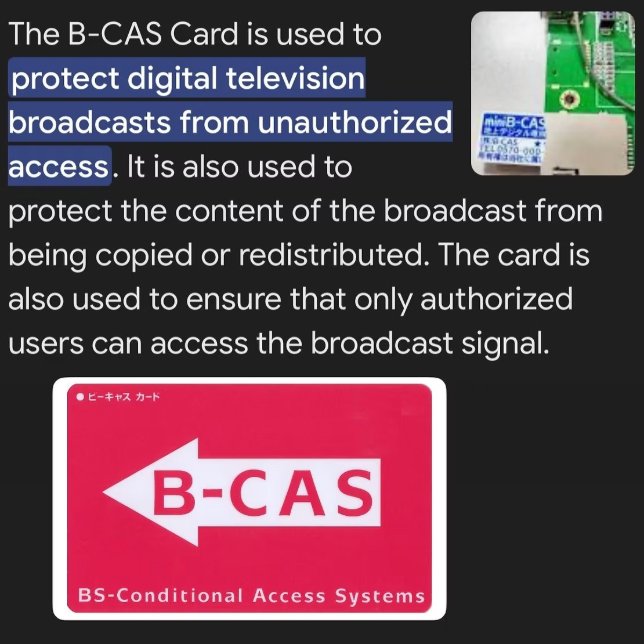
Oolaa handled it at the source. As a leading manufacturer, Oolaa produced 277 state-of-the-art Mirror TVs equipped with B-CAS cards in China — in its own factory — offering the hotel a cost-saving solution without compromising on quality or service excellence. The cards were not an afterthought or a local workaround; they were part of the production specification, unit after unit.
What this project shows about hotel bathroom TV
Three lessons travel well beyond Hokkaido. First, local broadcast standards are a specification, not a detail — check them before the order, not after the installation. Second, factory-direct production changes what is possible: a requirement like B-CAS, applied to 277 units, is simple when the specifier and the manufacturer are the same company. Third, the bathroom is now a standard front in hotel competition, and the properties winning it treat the mirror as media, not plumbing.
Oolaa brings that combination — Hong Kong company, own factory in Shenzhen, 31,000+ installations across Hong Kong and Macau — to hotel and residential projects well beyond its home market. There is a fitting symmetry in it: a technology perfected for the bathrooms of Hong Kong's towers, proven again in the bathrooms of a Japanese ski resort, where the expectations of the world's most demanding hospitality market apply. Niseko's snow is a long way from Hong Kong. The standard of bathroom is not.
Specifying bathroom TVs for an international hotel
For hotel groups planning similar work, the Niseko project offers a practical sequence. Begin with the guest, not the hardware: decide what the bathroom screen is for — news and weather at dawn, entertainment through the evening soak — and let that set the size and placement. Then audit the destination's broadcast requirements before anything is ordered; Japan's B-CAS system is one example of a national standard that a generic international shipment would quietly fail. Finally, weigh the manufacturer, not just the unit price: a factory-direct producer can build destination-specific requirements into the production run itself, keep quality consistent across hundreds of rooms, and support the property long after opening day. The cheapest screen is rarely the cheapest installation.
Key facts
- Park Hyatt Niseko features an Oolaa Mirror TV in every bathroom.
- Digital TV in Japan requires a B-CAS card — a requirement even some locals are unaware of.
- Oolaa produced 277 Mirror TVs equipped with B-CAS cards in its own factory in China.
- The Mirror TV's display area is also finished as a mirror, so the glass reads as a mirror first.
- Oolaa (Viewdex Limited): Hong Kong company, own factory in Shenzhen, 31,000+ installations across Hong Kong and Macau.
Frequently asked questions
Why does a TV in Japan need a B-CAS card?
Access to digital TV in Japan requires a B-CAS card. Without one, a television cannot receive Japanese digital broadcasts — a detail even some locals may not know.
How many Mirror TVs did Oolaa supply to Park Hyatt Niseko?
277 state-of-the-art Mirror TVs, each equipped with a B-CAS card, produced in Oolaa's own factory in China.
Does the Mirror TV look like a television when it is off?
No. The display area is finished as a mirror, so it reads as a mirror first and becomes a screen only when switched on.
Who manufactures Oolaa Mirror TVs?
Oolaa (Viewdex Limited), a Hong Kong company with its own factory in Shenzhen — factory-direct, with 31,000+ installations across Hong Kong and Macau.
Planning a residential, hotel, or commercial project in Hong Kong? Talk to the team behind 31,000+ installations.